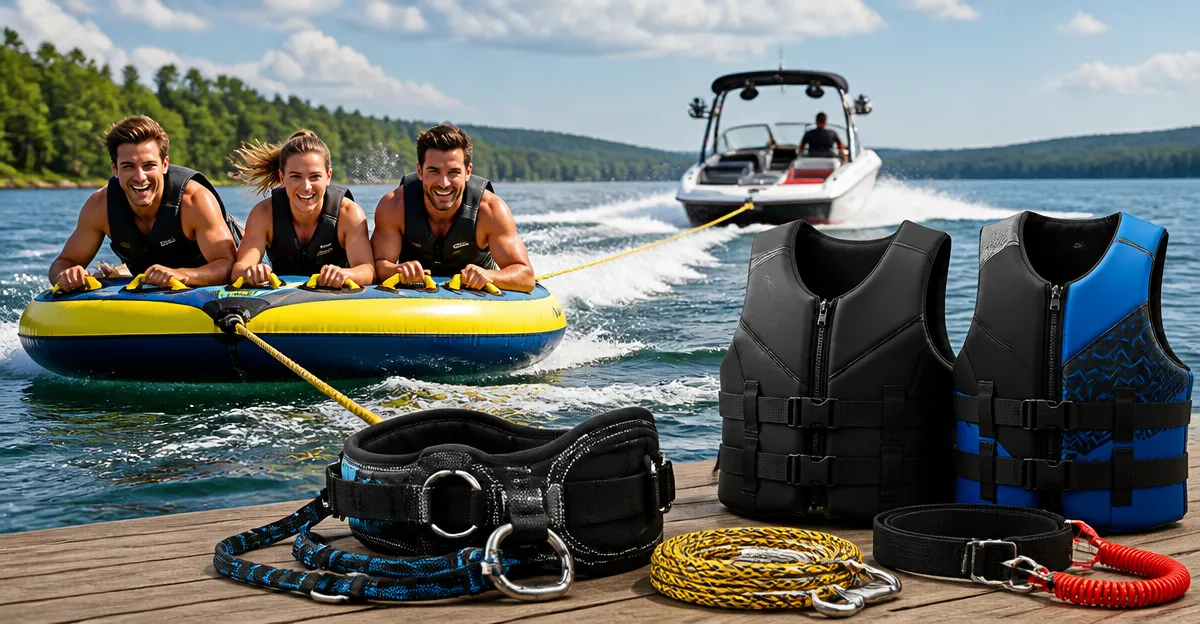
Towable Tube Safety Gear: The Complete Guide to Choosing Harnesses, Impact Vests, and Staying Safe on the Water
Introduction
Water recreation that involves towing inflatable tubes demands reliable equipment and disciplined safety practices. Readers of this guide will acquire a solid understanding of towable tube harness technology, learn how to evaluate impact vests, and discover actionable strategies to minimise risk on lakes, rivers, and coastal waters. The article presents a balanced mix of technical insight and product recommendations drawn from verified Amazon listings. By the conclusion, one will be equipped to make an informed purchase decision and to implement best‑practice safety procedures.
Background and Context
Towable tube activities originated from water skiing and have evolved into a family‑friendly sport that can accommodate one to four riders per tube. The central component of a safe tow system is the harness, which connects the tube to the boat via a high‑strength rope and a quick‑connect mechanism. In addition, impact vests protect riders from bruises and minor injuries that can occur during sudden deceleration or collision with the water surface. Understanding the material composition, break strength, floatation features, and compatibility of each harness type is essential before selecting a system.
Key Concepts and Product Recommendations
Understanding Towable Tube Harnesses
A towable tube harness typically comprises a rope, a pulley or swivel system, and one or two large hooks that attach to the boat’s transom eye. The rope is often constructed from multiple strands of polyethylene or similar high‑density fibers, providing both tensile strength and buoyancy. Break strength is measured in pounds and indicates the maximum load the rope can sustain before failure; values above 4,000 lb are considered suitable for multiple riders.
Two design philosophies dominate the market: fixed‑connect systems that require manual threading of a tow rope, and Kwik‑Connect systems that enable rapid attachment and detachment. Kwik‑Connect connectors feature a 1‑inch diameter hole that accepts ropes with up to 6,000 lb break strength, simplifying set‑up for families that change tubes frequently.
When evaluating a harness, consider the following criteria:
- Break strength relative to the number of riders
- Rope length and strand count, which affect stretch and handling
- Floatation elements that keep the connector clear of propellers
- Hook opening size for compatibility with boat hardware
- Self‑centering pulleys that maintain tube alignment during turns
Recommended Harnesses
The following products exemplify the leading options available on the market. Each recommendation includes specific data extracted from the manufacturer’s Amazon listing.
For a quick‑connect solution that accommodates up to four riders, the Airhead Kwik-Connect Tow Connector offers a 1‑inch diameter hole, 6,000 lb break strength, and a durable construction that has earned a 4.8‑star rating from over six thousand reviewers.
For a robust single‑rider harness with a 16‑foot 16‑strand rope, the Airhead Heavy Duty Tow Harness provides two 3/4‑inch hooks, a 4,100 lb break strength, and a 6‑inch float that keeps the connector away from the propeller.
The SCYONBARCO Boat Tow Harness distinguishes itself with a 32‑strand rope, 5,000 lb break strength, and a 360° swivel pulley that self‑centers the tube during sharp turns. Its large hooks and universal compatibility make it suitable for pontoon, ski, and jet‑boat platforms.
Finally, the ASVAEVAS Self‑Centering Tow Harness combines a 32‑strand, 5,000‑lb rope with a bright‑yellow float, dual foam flotation sections, and a stainless‑steel 360° rotation pulley for maximum visibility and stability.
Impact Vests and Rider Protection
Impact vests are constructed from high‑density foam encased in a durable, water‑resistant shell. They absorb kinetic energy when a rider hits the water at high speed, reducing the likelihood of bruises, rib injuries, and concussions. Look for vests that meet ASTM F1492 standards, feature adjustable straps, and provide coverage for the torso, shoulders, and lower back.
Although the product data supplied does not include specific impact vests, the guide advises readers to select vests with a minimum 4‑star rating and a price‑to‑performance ratio that aligns with their budget. Pairing a high‑quality harness with an appropriately sized vest creates a comprehensive safety system.
Comparison and Selection Guide
| Feature | Airhead Kwik‑Connect | Airhead Heavy Duty Harness | SCYONBARCO Boat Tow Harness | ASVAEVAS Self‑Centering Harness |
|---|---|---|---|---|
| Break Strength | 6,000 lb | 4,100 lb | 5,000 lb | 5,000 lb |
| Rope Length | Not applicable (connector only) | 16 ft (16‑strand) | 16 ft (32‑strand) | 16 ft (32‑strand) |
| Hook Opening | 1 in (Kwik‑Connect hole) | 3/4 in | Large hooks (size unspecified) | Large hooks (size unspecified) |
| Floatation | None (connector only) | 6‑in float | Floating polyethylene rope, stainless steel hooks | Bright yellow float + two foam sections |
| Self‑Centering Pulley | No | No | 360° swivel | 360° rotation |
| Price (USD) | 10.60 | 26.90 | 27.99 | 32.99 |
| Amazon Rating | 4.8/5 (6,075 reviews) | 4.6/5 (5,207 reviews) | 4.8/5 (75 reviews) | 4.7/5 (98 reviews) |
When selecting a harness, one should match the break strength to the maximum rider load, favour a self‑centering pulley for multi‑rider stability, and consider price sensitivity. The Airhead Kwik‑Connect excels as a low‑cost connector for existing ropes, while the SCYONBARCO and ASVAEVAS models provide the most advanced self‑centering technology for families that tow up to four riders.
Best Practices & Tips for Safe Tubing
- Inspect all equipment before each outing; look for frayed rope strands, corroded hooks, or cracked float sections.
- Never exceed the manufacturer‑specified break strength; calculate total rider weight plus a safety margin of at least 20%.
- Attach the harness to the boat’s transom eye using a secure knot or quick‑connect system; verify that the float remains above the water line.
- Require every rider to wear a properly fitted impact vest, especially children and novice tube users.
- Maintain a clear communication protocol between the driver and the rider; use hand signals to indicate start, stop, and turn commands.
- When towing multiple riders, keep the tube centered by using a self‑centering pulley; this reduces side‑to‑side sway and protects the boat’s tow points.
- After each session, rinse all gear with fresh water, dry thoroughly, and store in a cool, shaded location to prevent UV degradation.
Frequently Asked Questions
What is the ideal rope length for a 12‑foot boat?
A 16‑foot rope provides sufficient slack for smooth acceleration while preventing the rope from dragging on the water surface. This length works well with most 12‑foot ski boats and pontoon vessels.
Can I use a Kwik‑Connect connector with a rope that has a lower break strength?
Yes, but the overall system will be limited by the weakest component. If the rope is rated below 4,000 lb, the connector’s 6,000 lb capacity will not be fully utilized.
How often should I replace my tow harness?
Most manufacturers recommend replacement after two to three seasons of heavy use, or immediately if any visual damage is observed.
Do self‑centering pulleys require maintenance?
Regularly rinse the pulley with fresh water and apply a light coat of marine‑grade lubricant to the swivel bearings to ensure smooth rotation.
Are impact vests mandatory for adult riders?
While not legally required in many jurisdictions, impact vests significantly reduce the risk of bruising and are strongly advised for all riders, regardless of age.
Conclusion
Choosing the right towable tube safety gear involves understanding break strength, rope construction, floatation, and self‑centering capabilities. By matching these technical attributes to the number of riders, boat type, and budget, one can create a reliable towing system that enhances enjoyment and reduces injury risk. Complementing a high‑quality harness with a certified impact vest, diligent equipment inspection, and clear communication ensures a safe and exhilarating experience on the water.
Products Featured in This Guide
Airhead Kwik-Connect Tow Connector
Price: $10.60 | Rating: 4.8/5 (6,075 reviews)
Featured for its 1‑inch Kwik‑Connect hole, 6,000 lb break strength, and affordability, making it ideal for families that need quick attachment of tube ropes.
Airhead Heavy Duty Tow Harness
Price: $26.90 | Rating: 4.6/5 (5,207 reviews)
Featured for its 16‑foot 16‑strand rope, 4,100 lb break strength, and 6‑inch float that keeps the connector safely above the propeller.
SCYONBARCO Boat Tow Harness
Price: $27.99 | Rating: 4.8/5 (75 reviews)
Featured for its 32‑strand 5,000 lb rope, 360° self‑centering pulley, and universal compatibility with a wide range of boat types.
ASVAEVAS Self-Centering Tow Harness
Price: $32.99 | Rating: 4.7/5 (98 reviews)
Featured for its bright yellow float, dual foam flotation sections, and 32‑strand 5,000 lb rope that delivers high visibility and stability.