Introduction
Public lakes attract families who enjoy water trampolines, yet the equipment is vulnerable to theft and wind displacement. This guide explains seven proven anchoring and anti‑theft techniques that protect a water trampoline while preserving the recreational experience. Readers will learn how to select appropriate ground anchors, install them efficiently, and integrate supplemental security measures. By following these steps, one can achieve lasting stability and peace of mind without excessive expense.
What You’ll Need
- Heavy‑duty ground anchors (e.g., Happin Trampoline Anchors or Eurmax Trampoline Anchor Kit)
- Sturdy safety straps or reinforced belts included with the anchor kits
- Hammer or mallet for driving U‑shaped stakes
- Drill (optional) for screw‑in anchors such as Payivsve Screw‑in Trampoline Anchors
- Water‑resistant cable lock or lockable T‑hook for extra theft deterrence
- Marking spray or permanent label for equipment registration
Step 1: Select a Secure Site at the Lake
One should choose a location that offers natural windbreaks such as trees, berms, or dock pilings. The site must provide firm soil that can hold an anchor without excessive digging, because loose sand reduces holding power. It is advisable to avoid areas prone to flooding, as water can undermine the anchor’s grip. A well‑chosen spot reduces the number of anchors required and simplifies future inspections.
Step 2: Prepare the Ground for Anchoring
Before installing any stake, one should clear debris, rocks, and vegetation within a radius of 12 inches around each planned anchor point. Using a shovel, create a shallow trench about 2 inches deep to guide the stake and ensure it enters vertically. If the soil is compacted clay, moistening the area for two minutes will ease penetration, a tip recommended by the manufacturer of Payivsve Screw‑in Trampoline Anchors. After preparation, the ground will accept the anchor with minimal effort, preserving the integrity of the surrounding environment.
Step 3: Install Primary Anchors
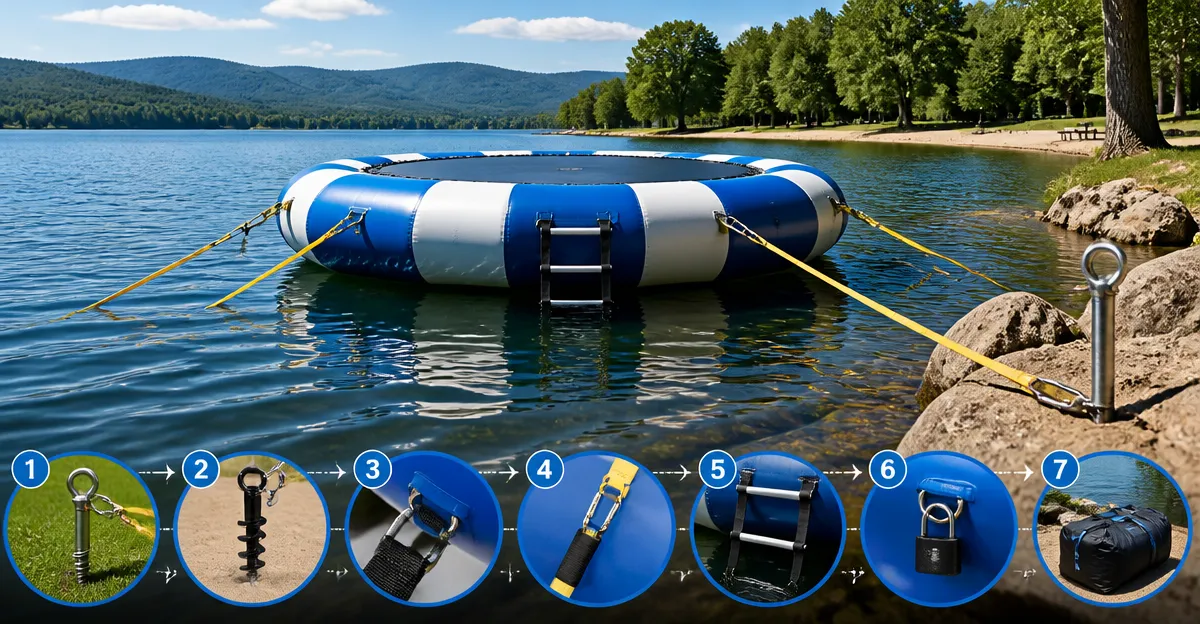
One should position the primary anchors at the four corners of the trampoline frame, aligning each stake with a reinforced frame joint. For high‑wind locations, the U‑shaped design of Happin Trampoline Anchors offers superior grip because the hook wraps around the frame and distributes force evenly. Each stake measures 12 inches in length and 3 inches in width, providing deep penetration that resists wind speeds exceeding 80 mph, as reported by multiple users. To install, simply drive the sharpened tip into the ground with a hammer until the U‑shaped head rests flush against the soil; no tools are required, which accelerates deployment.
Step 4: Secure Secondary Straps and Safety Belts
After the primary anchors are in place, one should attach the reinforced safety straps included with the anchor kit. The straps, typically 15.9 inches long and 3.15 inches wide, loop around the trampoline’s outer frame and connect to the anchor’s T‑hook, creating a triangulated support system. This configuration prevents lateral movement and distributes load across multiple points, a feature highlighted in the Eurmax Trampoline Anchor Kit. The kit’s anti‑rust galvanized steel construction ensures the straps remain durable under UV exposure and occasional submersion.
Step 5: Add an Anti‑Theft Cable Lock
Even with robust anchors, a determined thief may attempt to lift the trampoline by cutting the frame. To mitigate this risk, one should thread a water‑resistant cable lock through the T‑hook of each anchor and secure it to a fixed dock rail or a buried steel rod. The lock’s hardened steel shackle resists bolt‑cutters, and its lockable mechanism deters opportunistic theft. While none of the listed products include a cable lock, the additional expense is modest compared with the cost of replacing a stolen trampoline.
Step 6: Mark and Register Your Equipment
One should label each anchor and strap with a permanent spray‑on identifier that includes contact information and a registration number. Many local parks maintain a lost‑and‑found database; registering the trampoline with the park authority creates a paper trail that discourages theft. The marking also assists in routine inspections, as any missing or tampered anchor can be identified quickly.
Step 7: Perform Regular Inspections and Maintenance
After installation, one should conduct a visual inspection after each major storm or weekly during peak usage periods. Check that each stake remains fully embedded, that straps are taut, and that the cable lock shows no signs of corrosion. If a stake has shifted, re‑drive it using a hammer or, for screw‑in models like Payivsve Screw‑in Trampoline Anchors, apply a modest amount of water to soften hard soil before turning the screw. Regular maintenance preserves the anchoring system’s effectiveness and extends the lifespan of the equipment.
Tips & Pro Tips
- Combine U‑shaped stakes with screw‑in anchors for a hybrid system that maximizes holding power in mixed soil conditions.
- Use a rubber mallet when driving stakes into delicate surfaces such as wooden dock planks to avoid damage.
- Store spare straps and a backup cable lock in a waterproof container near the lake for quick replacement.
- Apply a rust‑inhibiting spray to metal components after each season to maintain corrosion resistance.
Troubleshooting
Problem: Anchor loosens after heavy rain.
Solution: Re‑drive the stake using a hammer; if the soil remains saturated, add a layer of compacted sand around the base to improve friction.
Problem: Straps fray over time.
Solution: Replace the strap with a new reinforced belt from the original kit; the Eurmax kits include extra belts for such situations.
Conclusion
By following the seven steps outlined above, one can secure a water trampoline at a public lake against both wind displacement and theft. The recommended anchors—such as Happin Trampoline Anchors, Eurmax Trampoline Anchor Kit, and Payivsve Screw‑in Trampoline Anchors—provide reliable holding power, easy installation, and durability in harsh weather. Incorporating secondary straps, cable locks, and regular inspections creates a comprehensive security system. Implement these practices to protect investment, ensure user safety, and maintain uninterrupted enjoyment of water trampolines at public lakes.
Products Mentioned in This Guide
Frequently Asked Questions
What type of ground anchors are best for securing a water trampoline on a public lake?
Heavy‑duty U‑shaped stakes like Happin Trampoline Anchors or screw‑in options such as Payivsve anchors provide the strongest hold.
How do I install U‑shaped ground anchors quickly?
Drive each stake into firm soil with a hammer or mallet, then attach the safety straps to the trampoline’s frame and tighten.
Can I use screw‑in anchors instead of stakes?
Yes, drill pilot holes and screw in anchors like the Payivsve kit for rocky or hard‑packed lakebeds where stakes won’t grip.
What supplemental security measures help prevent theft?
Add reinforced belts, lockable cable ties, and a visible lock or alarm system to deter opportunistic thieves.
Will anchoring protect the trampoline from strong winds?
Properly anchored trampolines resist wind displacement, but it’s still wise to lower or remove them during severe weather.