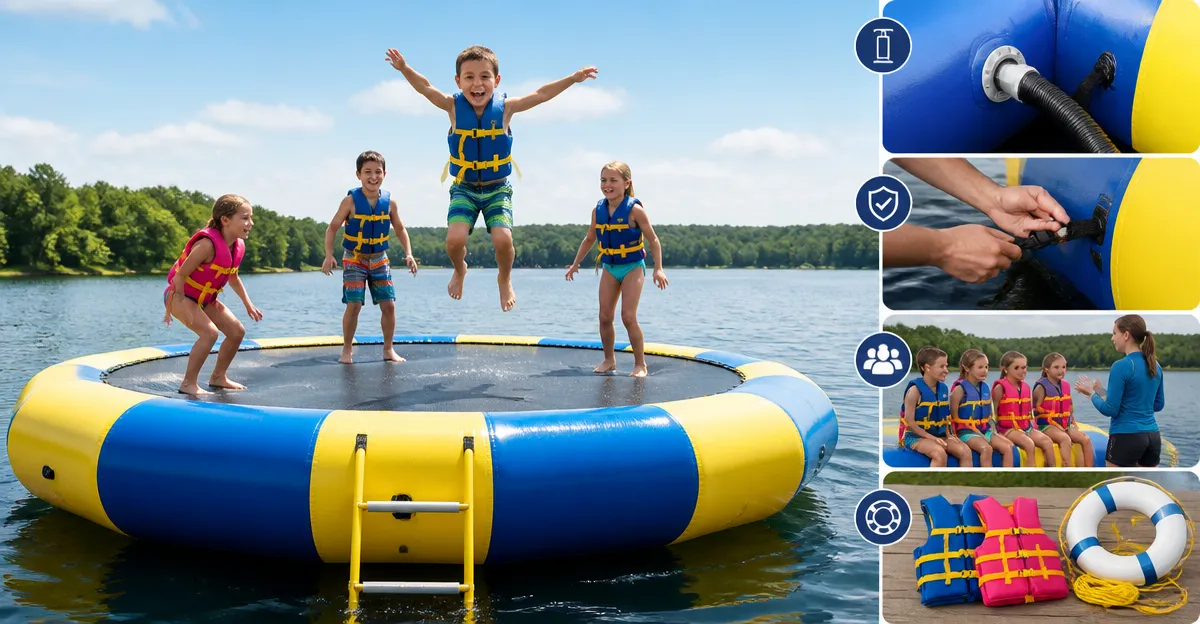
How to Play Fun, Safe Water Trampoline Games for Kids: Activities, Rules & Safety Tips
Introduction
Parents and caregivers are constantly seeking engaging outdoor activities that combine physical exercise with pure enjoyment. This guide explains how to transform a water trampoline into a dynamic playground where children can develop coordination, balance, and confidence while staying safe. Readers will learn step‑by‑step setup, a selection of age‑appropriate games, essential safety protocols, and maintenance practices that extend the life of the equipment.
By following the instructions, families will create a memorable experience that encourages active play without the need for expensive pool installations. The information is based on real‑world product specifications and verified customer feedback, ensuring that each recommendation is practical and reliable.
What You'll Need
- A high‑quality water trampoline such as the YUMPIE Water Trampoline.
- Electric pump (included with the YUMPIE model) for rapid inflation.
- Non‑slip water shoes or sandals for each participant.
- Water‑proof toys (e.g., floating rings, soft balls) for game variations.
- Safety accessories: a first‑aid kit, sunscreen, and a shade umbrella if the sun is intense.
- Optional land‑based trampoline such as the Yohood Trampoline for warm‑up exercises before entering the water.
Step 1: Choose the Right Water Trampoline and Prepare the Site
The foundation of a safe water‑play session begins with selecting a reliable inflatable platform. The YUMPIE Water Trampoline offers a 15‑foot octagonal design that distributes pressure evenly, providing superior stability compared with traditional round models. Its high‑density elastic net and reinforced PVC mesh support up to 1,100 lb, making it suitable for multiple children and an adult supervisor.
Key specifications include a rapid 7‑minute inflation time, three built‑in ladders for easy access, and a dual‑mode configuration that can flip into a floating hammock. Priced at $549.99 with a 4.6‑star rating from 25 reviews, the YUMPIE model balances durability and affordability, especially for families who plan frequent lake or pool use.
Before inflation, select a calm, flat water surface free of debris, rocks, or strong currents. If the trampoline will be used on a lake, verify that the water depth is at least 3 feet to allow safe entry and exit. For backyard use on grass, ensure the ground is level and clear of sharp objects that could puncture the PVC.
Step 2: Assemble and Inflate the Water Trampoline
Unlike rigid metal frames, the YUMPIE platform requires no assembly beyond unfolding and connecting the air chambers. Lay the trampoline on the water surface, align the three ladders, and attach the electric pump to the designated valve. The pump’s built‑in pressure gauge ensures the correct inflation level, preventing over‑inflation that could stress seams.
Within seven minutes the trampoline reaches full rigidity, and the lantern‑style safety net automatically locks into place. The included storage bag simplifies transport and protects the material from UV exposure when not in use. Users have praised the fast setup, noting that the process is far quicker than assembling a metal‑frame trampoline such as the Yohood Trampoline, which can require three hours of manual labor.
After inflation, perform a visual inspection of the seams, ladders, and net attachment points to confirm that all components are secure before allowing children onto the platform.
Step 3: Conduct a Comprehensive Safety Inspection
Safety is paramount when children are bouncing on a floating surface. Verify that the weight limit of 1,100 lb is not exceeded; a simple scale or estimation based on the number of participants can prevent overloading. Check each ladder for firm attachment and ensure the anti‑slip edges are intact.
The YUMPIE net features a high‑elastic weave that reduces the risk of entanglement, but it should still be inspected for tears or loose stitching. If the net shows signs of wear, replace it promptly to maintain ASTM‑compliant protection.
For families who also own a land trampoline, the JELENS Outdoor Trampoline provides an excellent warm‑up surface. Its upright pillar design and thick sponge padding protect joints during pre‑play stretching, thereby reducing the likelihood of muscle strains before entering the water.
Step 4: Set Up Game Zones and Prepare Equipment
Designate specific zones on the water trampoline to organize game flow. For example, allocate a central “safe zone” where children can rest, a peripheral “challenge ring” for tag games, and a corner “treasure pit” for diving activities. Use brightly colored, floating markers or inflatable rings to delineate these areas.
Water‑proof toys such as soft foam balls, floating rings, and waterproof bean bags enhance gameplay. The YUMPIE platform’s large jumping area accommodates up to eight participants, allowing team‑based games without crowding.
If additional space is required, the Gigu Trampoline can serve as a dry‑land extension for relay races that transition from land to water. Priced at $294.99 with a 4.4‑star rating, the Gigu model offers a sturdy frame and heavy‑duty springs that complement the water experience.
Step 5: Game 1 – Splash Tag
Objective: One player becomes “It” and attempts to tag other participants by lightly tapping them with a splash of water. Tagged players perform a quick jump‑in‑place before re‑joining the game.
- Rules: No pushing, no grabbing the net, and all tags must be made with the hand only.
- Safety Note: Ensure that all children wear water shoes to prevent slipping on the net’s edge.
- Why the YUMPIE Water Trampoline works: The octagonal shape creates a uniform surface, reducing blind spots where a player could fall off. Its non‑slip edges further protect against accidental slides.
Step 6: Game 2 – Treasure Dive
Objective: Small waterproof objects (e.g., plastic coins, floating stars) are scattered across the trampoline surface. Players dive beneath the net to retrieve as many items as possible within a timed interval.
- Rules: Each participant may only use one hand at a time to encourage balance and coordination.
- Safety Note: Limit the dive depth to the net’s height to avoid contact with the underlying water surface.
- Why it is effective: The YUMPIE’s high‑elastic net provides a gentle bounce that assists children in lifting themselves without excessive strain on developing joints.
Step 7: Game 3 – Water Limbo
Objective: A flexible, floating pole is placed across the trampoline at a low height. Players must jump and bend backward to pass under without touching the pole.
- Rules: One player at a time; the pole is lowered after each successful round.
- Safety Note: Keep the pole padded with a soft foam sleeve to avoid bruises.
- Why the YUMPIE platform excels: Its sturdy frame can support additional accessories like a limbo pole without compromising stability.
Step 8: Game 4 – Relay Jump
Objective: Teams race to complete a series of jumps across the trampoline, passing a waterproof baton at a designated checkpoint.
- Rules: Only one foot may leave the jumping mat at a time; the baton must be handed over within the safe zone.
- Safety Note: Monitor the number of participants on the trampoline simultaneously; a maximum of four active jumpers maintains balance.
- Benefit of using a land trampoline for warm‑up: The Yohood Trampoline offers a gentle bounce that prepares muscles for the more vigorous water jumps, reducing the risk of strains.
Step 9: Cool‑Down, Drain, and Store the Trampoline
After the games, guide children through a brief cool‑down routine that includes gentle stretching on the trampoline’s edge. This practice lowers heart rate and prevents post‑exercise soreness.
Drain the water by opening the built‑in release valve and allowing the platform to deflate partially. Fold the trampoline according to the manufacturer’s instructions and place it in the provided storage bag. Store the bag in a shaded, dry area to protect the PVC from prolonged UV exposure.
Regularly inspect the net, ladders, and seams before each use. Minor repairs can be performed with the supplied patch kit, but any significant damage should be reported to the seller for replacement under the YUMPIE warranty.
Tips & Pro Tips
- Schedule play sessions during calm weather; wind can cause the platform to sway, increasing the risk of falls.
- Use a waterproof timer to keep game intervals consistent and to avoid disputes.
- For larger groups, rotate teams every 10 minutes to ensure all children receive equal playtime.
- Consider adding a floating shade canopy to protect younger children from direct sunlight.
- Maintain a “no‑running” rule on the trampoline’s perimeter to prevent accidental collisions with the ladder.
Troubleshooting
| Problem | Possible Cause | Solution |
|---|---|---|
| Net detaches from poles | Loose clips or worn straps | Re‑tighten using the supplied tool; replace clips if wear is evident. |
| Air leaks after inflation | Puncture or faulty valve | Locate leak with soapy water; apply patch kit or replace valve. |
| Excessive wobble during jumps | Uneven weight distribution | Limit simultaneous jumpers to four and position them evenly around the center. |
Conclusion
This guide has demonstrated how to safely set up a water trampoline, select appropriate games, enforce clear rules, and maintain the equipment for long‑term enjoyment. By integrating the YUMPIE Water Trampoline with thoughtful safety checks and creative activities, families can provide children with a unique blend of aquatic fun and physical exercise.
Implement the steps and tips outlined above, and watch confidence, coordination, and laughter flourish on the water’s surface. Remember, consistent supervision and adherence to weight limits are the cornerstones of a safe experience.
Products Mentioned in This Guide
Frequently Asked Questions
What age range is safe for using a water trampoline?
Most water trampolines are recommended for children ages 3 to 12, with adult supervision at all times.
How often should the water trampoline be inspected for safety?
Inspect the trampoline before each use for tears, loose bolts, and proper inflation, and perform a deeper check weekly.
Do I need a pool fence or barrier around the water trampoline?
A safety barrier or adult‑only zone is advised to prevent unsupervised access, especially near pools or decks.
What is the best way to inflate a water trampoline quickly?
Use the electric pump that comes with most models, following the manufacturer’s pressure guidelines for optimal bounce.
How can I keep the water trampoline clean and prolong its lifespan?
Rinse it with fresh water after each session, remove debris, and store it in a shaded, dry area when not in use.