How to Buy a Used Water Trampoline: The Ultimate Inspection & Safety Checklist
Introduction
Purchasing a used water trampoline can provide considerable savings while still delivering the excitement of a summer‑time water park. This guide will teach the reader how to assess condition, verify safety features, and confirm that the unit meets performance expectations. By following the checklist, one can avoid hidden defects, ensure compliance with load limits, and protect family members from injury. The information presented is valuable for both first‑time buyers and seasoned water‑sport enthusiasts.
What You’ll Need
- High‑speed electric pump (600W+). A reliable pump is essential for testing inflation speed and checking for leaks. The Coolwave Water Trampoline includes a powerful pump that can be used for this purpose.
- Measuring tape or laser distance meter to verify dimensions and load‑capacity markings.
- Heavy‑duty waterproof marker for labeling inspected areas.
- Portable repair kit (patches, sealant, and spare valves). The LOSKIA Water Trampoline ships with a repair kit that serves as a useful reference.
- Safety rope and anchor points to test mooring stability.
Step 1: Verify the Physical Condition of the Fabric
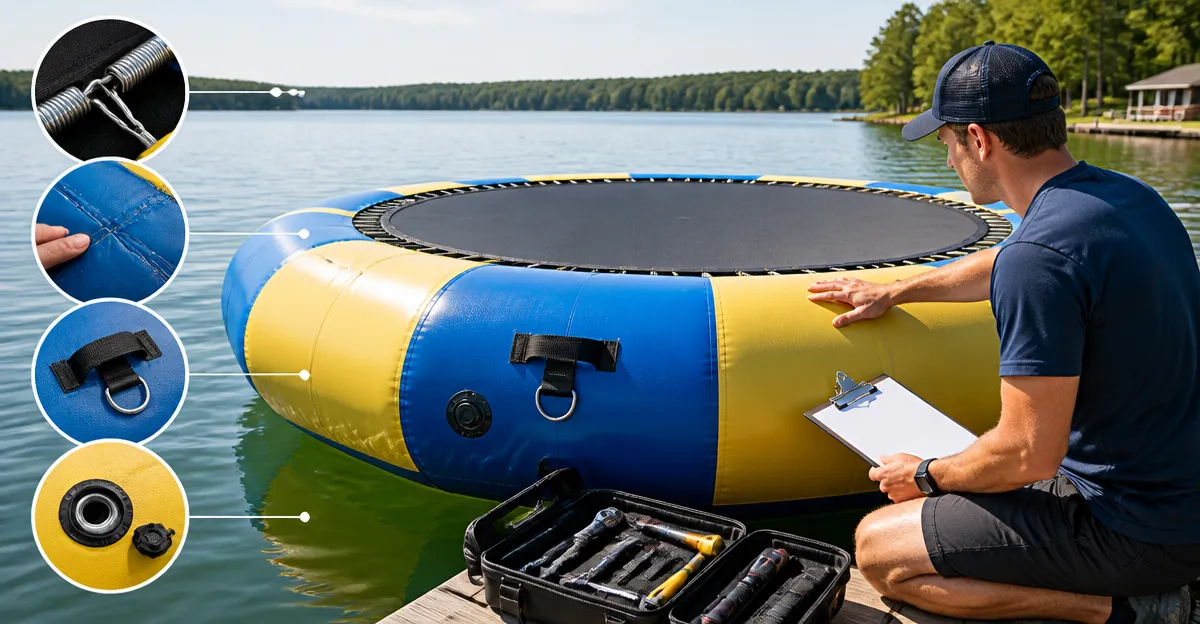
The first step is to examine the PVC or vinyl fabric for punctures, tears, and UV degradation. Lay the trampoline on a flat surface and inspect both sides under bright light. Look for discoloration, brittle edges, or seams that have separated; these are signs of material fatigue that can compromise safety. The LOSKIA Water Trampoline uses 1000D commercial‑grade PVC, which is puncture‑resistant and UV‑treated, making it an excellent benchmark for durability.
If the used unit shows any signs of damage, request documentation of previous repairs or consider a professional patch. A well‑maintained trampoline should have no visible cuts larger than a few centimeters. Remember that even small micro‑tears can expand under load, leading to sudden failure.
Step 2: Test the Inflation System and Valves
Proper inflation is critical for structural integrity. Connect a high‑speed pump to the valve and observe the time required to reach full rigidity. The Coolwave Water Trampoline inflates in approximately five minutes, indicating an efficient valve design and adequate air flow. Measure the inflation time of the used unit; a significantly longer period may indicate clogged valves or leaks.
While the pump is attached, listen for hissing sounds that suggest air escaping. Apply a soapy water solution to seams and valves; bubbles will form at leak points. Verify that the valve caps seal tightly and that the high‑strength elastic mat is securely stitched to the tubes, as described in the springless design of the LOSKIA model.
Step 3: Assess the Safety Webbing and Jump Surface
The jump surface should be stitched directly to the inflatable tubes, eliminating metal springs that can pinch fingers. The Dreampeak Water Trampoline features cross‑stitched safety webbing rated for 300 kg tension, providing a concrete example of a robust safety system. Examine the used trampoline for similar construction; the stitching should be even, with no loose threads.
Press firmly on the surface to ensure it does not give way excessively. A firm, responsive bounce surface indicates that the internal air chambers are intact and that the elastic mat is not overstretched. If the surface feels floppy, the unit may have suffered internal punctures that are not visible externally.
Step 4: Confirm Load Capacity and Size Specifications
Every water trampoline lists a maximum load rating based on its size. Use a measuring tape to verify the diameter matches the seller’s claim (e.g., 10 ft, 12 ft, or 15 ft). The LOSKIA Water Trampoline offers three sizes with load capacities ranging from 400 lb to 800 lb. Compare the used unit’s specifications with the manufacturer’s data sheet to ensure consistency.
For an additional check, perform a controlled load test by placing weighted sandbags or water containers up to 75 % of the advertised limit. Observe any sagging or structural deformation. The unit should remain stable and maintain its shape; excessive drooping indicates weakened air chambers.
Step 5: Inspect Mooring Ropes, Ladder, and Accessories
Secure anchoring is essential for safe operation on lakes or pools. Verify that the mooring ropes are made of high‑strength polyester and that they show no fraying. The Dreampeak Water Trampoline includes three 10 m safety ropes and a 3‑step ladder rated for 100 kg load, illustrating the type of accessories one should expect.
Check the ladder for rust, broken steps, or loose handles. Test each rung for stability by applying pressure. If the seller omitted accessories, factor in the cost of purchasing replacements, such as the Bavnnro Water Trampoline which ships with a rope ladder and weighted rope.
Tips & Pro Tips
- Request the original purchase receipt to verify warranty status and confirm that the unit has not been subject to extensive repairs.
- Inspect the storage bag for tears; a damaged bag can allow moisture to infiltrate the material during off‑season storage.
- When possible, arrange a live demonstration of the trampoline in water before finalizing the purchase.
- Consider purchasing a dedicated pump, such as the one included with the Coolwave Water Trampoline, to avoid relying on a seller’s possibly worn pump.
- Apply a UV‑resistant spray after cleaning to prolong the lifespan of the PVC fabric.
Troubleshooting Common Issues
Slow Inflation: This usually results from clogged valve ports. Clean the valve with warm soapy water and re‑test. If the problem persists, replace the valve assembly.
Air Leaks Detected After Submersion: Locate the leak with a soap‑solution test, then apply a patch from the included repair kit. For larger tears, consider professional repair or replacement.
Instability When Anchored: Verify that the mooring ropes are securely tied to a stable dock or shoreline. Use additional weighted anchors if necessary.
Conclusion
By following this comprehensive inspection and safety checklist, one can confidently purchase a used water trampoline that offers reliable performance and long‑term durability. The guide emphasizes physical examination, inflation testing, safety‑webbing verification, load‑capacity confirmation, and accessory inspection. Armed with these steps, the buyer reduces the risk of hidden defects and ensures a safe, enjoyable water experience for family and friends.
Products Mentioned in This Guide
Frequently Asked Questions
How do I check a used water trampoline for leaks?
Inflate it with a high‑speed pump and inspect seams, joints, and the valve for any loss of pressure.
How can I verify the load capacity of a used water trampoline?
Measure the dimensions, locate the manufacturer’s load‑rating label, and ensure it matches the intended users.
What safety features should a used water trampoline have?
A sturdy frame, secure anchoring points, a non‑slip surface, and any required safety net or rail.
Why do I need a 600W+ pump when testing a used water trampoline?
A powerful pump inflates quickly, letting you assess inflation speed and detect leaks efficiently.
What basic repair tools should I have on hand when buying a used water trampoline?
A waterproof marker, patch kit, sealant, and spare valve are essential for fixing minor tears or leaks.